Home / Journal / Investing in Real Estate With Leverage: Without Going Broke
Investing in Real Estate With Leverage: Without Going Broke
May 29, 2025 , 6 Min. Read
Diving into real estate has become a go-to move for those wanting to broaden their investment horizons. Everywhere you turn, there’s talk about the power of property—whether it’s seminars promising quick profits or reality shows highlighting huge wins from flipping homes or managing rentals.
But let’s not sugarcoat it—real estate isn’t plug-and-play like stocks. You can’t just dabble in it with pocket change and expect to own a profitable property. You need capital, time, and a clear strategy. And while the process may seem lengthy and even intimidating, there’s one financial tactic that can make entry easier and growth faster: leverage.
Let’s unpack what leverage means in real estate, how it works, when to use it, and when to be cautious.
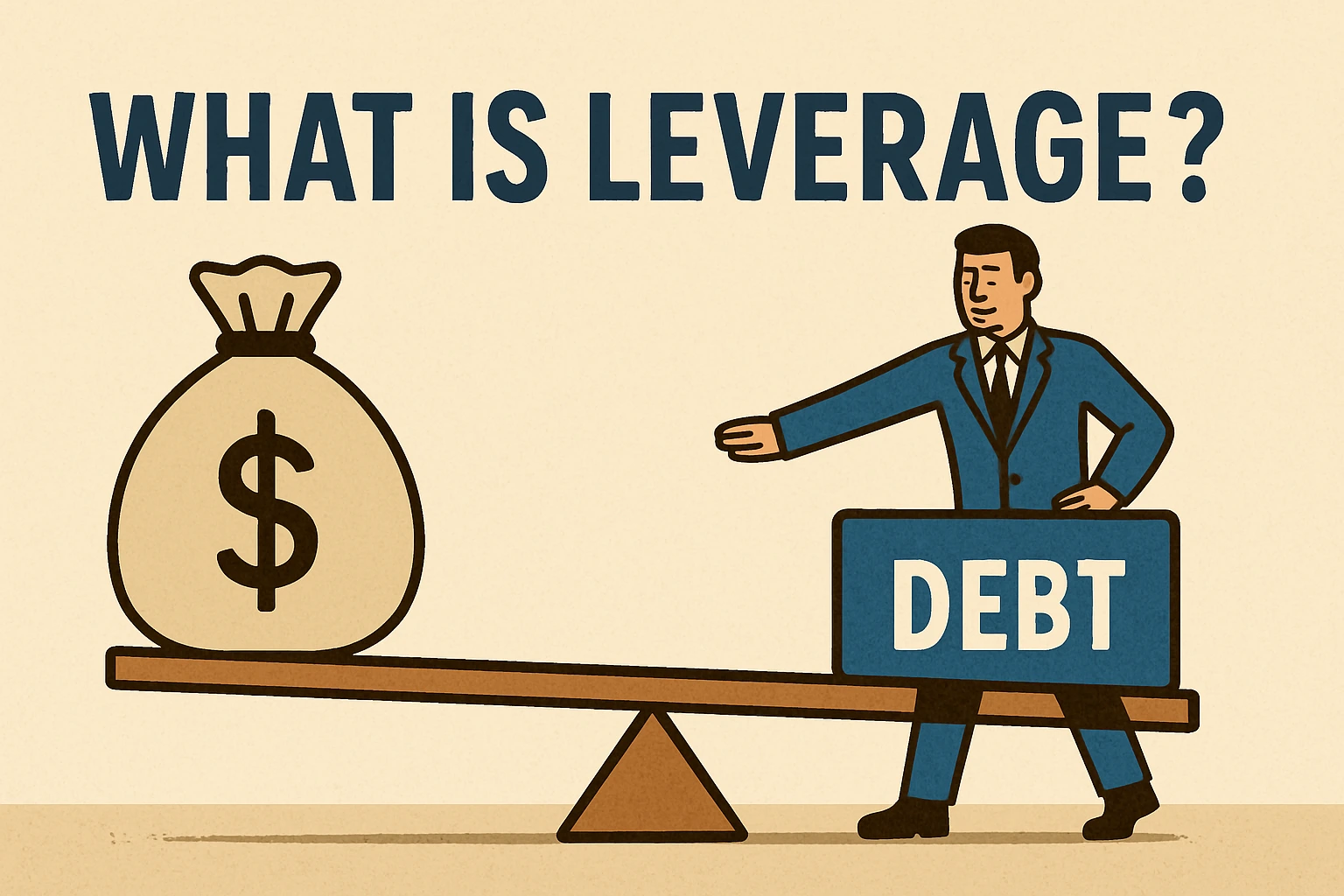
What Is Leverage?
In financial terms, leverage refers to using borrowed money to increase the potential return on an investment. It’s a concept widely used across both corporate and personal investing. In real estate, it typically involves taking out a loan—like a mortgage—to acquire property with only a fraction of the total purchase price coming from your own pocket.
The appeal? Leverage magnifies your gains if the property appreciates. But it also magnifies your losses if values drop. It’s a powerful but double-edged sword, and understanding both sides is critical to using it wisely.
Ways to Access Leverage
The most straightforward form of leverage is a mortgage. With a 20% down payment, you gain control of 100% of the property. Some homebuyers even qualify for lower down payments depending on the financing program. That means your initial investment could be even smaller.
If you’re buying as an investor, you may be able to partner with others who bring capital to the table. In some cases, sellers may agree to finance a portion of the sale, reducing your upfront cost even further. These scenarios allow investors to buy properties with little or no money down, maximizing the impact of every dollar.
Example of Leveraging
Let’s run a simplified scenario. Suppose you buy a $500,000 property and only put down $100,000 (20%). The remaining $400,000 is borrowed.
Now imagine the property’s value increases 5% in a year. It’s now worth $525,000. That $25,000 increase isn’t just a 5% return on your $100,000—it’s a 25% gain, thanks to leverage.
Compare that to buying a $100,000 property outright in cash. At 5% appreciation, your return is just $5,000 for the year. The takeaway? Leverage can dramatically boost your return on investment. And over a decade or more, that compounding effect can grow your wealth significantly.
The Dangers of Leverage
Of course, there’s a flip side. That same leverage works against you if property values fall. Using our earlier example, if your $500,000 home drops 5% in value, it’s now worth $475,000. That’s a $25,000 loss, and your equity takes the hit.
Worse, if the market keeps sliding—say another 5% per year—you could be sitting on a property worth less than your remaining loan balance. That’s known as being “underwater.” In contrast, if you had bought a $100,000 home in cash, your loss would’ve been limited to just $5,000—a much smaller risk.
The takeaway: Leverage amplifies everything, good and bad. It’s essential to have a risk strategy in place.
Cons of Leveraging Many Properties
When you scale up to multiple properties, the stakes increase. Many commercial investors put down the minimum on each deal to control more real estate—but this can be risky if the market takes a hit.
Let’s say you buy a small apartment complex for $500,000, putting down $100,000. If the market drops 30%, your building’s value falls to $350,000. You still owe the lender $400,000. That’s negative equity—and a serious financial problem.
If that property’s rent drops too, and you rely on that income to pay other mortgages, you could face a domino effect where one bad deal sinks your entire portfolio. This is where leverage can turn from strategic tool into financial trap.
Avoiding Leveraging Risks
Now that you’ve seen both the upside and downside, don’t be discouraged. Leverage isn’t the enemy—misused leverage is. To use it wisely, start with these golden rules:
Don’t assume markets will always go up. Just because a neighborhood has been hot for years doesn’t mean prices will keep rising forever. Always plan for possible downturns.
Stay conservative with your budgeting. A lower down payment means higher monthly payments. Make sure you can carry the mortgage even if the property sits empty for a while or needs unexpected repairs.
Expect the unexpected. Bad tenants, a cooling rental market, maintenance costs—these things happen. Build financial cushions and buy only what you can afford to manage through lean periods.
Focus on fundamentals. Good location, stable cash flow, and manageable debt will protect you when conditions shift.
Leverage can be a real estate investor’s best friend or worst enemy. Used strategically, it lets you scale faster, grow your portfolio, and multiply your returns. But it comes with real risks—especially in volatile or overleveraged markets.
The key is balance. If you understand what you’re borrowing, plan for the worst, and structure deals around solid fundamentals , you’ll be in a far better position to make leverage work for you—not against you.
What is leverage in real estate investing?
Leverage is the use of borrowed money, like a mortgage, to buy real estate. It allows you to control more property with less of your own cash, increasing your potential returns.
How does leverage help grow my real estate portfolio?
By using leverage, you can buy larger or multiple properties with a smaller initial investment. This allows you to earn income and appreciation on assets you wouldn’t otherwise afford.
What are the risks of using leverage in real estate?
Leverage can increase losses as much as gains. If the property value drops or rental income decreases, you could end up with negative equity or trouble covering mortgage payments.
How much down payment is typically needed when using leverage?
Most lenders require around 20% down for investment properties. However, options like partnerships, seller financing, or certain loan programs may reduce upfront costs.
How can I safely use leverage in real estate?
Stay within conservative loan-to-value ratios (70–80%), keep emergency reserves, invest in cash-flowing properties, and plan for market downturns before you borrow.